



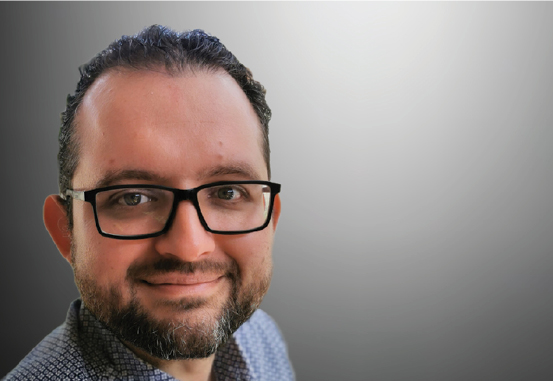
WITH the cost of medications driving people to import medicines at risk to their health and finances, health ethicist Dr Narcyz Ghinea (pictured) argues there has to be a better way - and there could be a role for pharmacists, he told Pharmacy Daily.
Statistics show that around 10% of Australians do not take, or delay taking, prescribed medicines due to cost, and a survey of people over 45 found that 22% were unable to afford them at some point in the last year.
Yet others are making choices such as skipping meals, delaying bill payments, borrowing money or selling assets to buy medicine.
One option available to patients is to import medicines at a discount through the Personal Importation Scheme (PIS), and almost 200,000 Australians over 45 do so each year.
But with one recent review finding that up to 25% of medicines in global circulation are substandard or fake, people who choose to import medicines risk their health and - given that some are still very expensive - their finances, especially if they do not work.
Dr Ghinea, from the University of Sydney School of Public Health, told Pharmacy Daily that pharmacists could play a role in helping with affordability, though options are limited under current regulations.
"As things stand, I don't think pharmacists can do much more than encourage or prescribe generics when available, as they are a tightly regulated profession," Dr Ghinea said.
"Compounding easily copied small molecule drugs is a way pharmacists could help with affordability, but there has been a crackdown recently, especially around Ozempic," said Dr Ghinea.
"While this is ostensibly for public safety, in the US, the industry has been actively working to stop compounding of cheaper versions of their products for obvious reasons," he said.
However, Dr Ghinea does see some potential through the Special Access Scheme (SAS), which doctors and (depending on the drug category) other health professionals use to obtain unapproved medicines.
"What I would like to see is the Special Access Scheme extended to include affordability considerations.
"Currently, monetary considerations are explicitly excluded as a valid justification for using the SAS, at least for Category B [for non-life-threatening conditions].
"So a doctor can use unapproved drugs if it is not otherwise available in Australia, but if it is available, they can't use the scheme to access a cheaper version from abroad," Dr Ghinea said.
This leaves patients to their own devices to import drugs via the PIS without any oversight.
"From the patient's perspective, there is no difference between a drug being unavailable and unaffordable, so such a situation is, in my view, unjustified and a form of systemic injustice.
"If doctors can source unapproved medicines through pharmacists using the SAS, why can't patients also use pharmacists to source cheaper versions of products they can't otherwise afford?
"It seems to me the barriers are artificial, as there are already systems and supply chains in place to source unapproved medicines."
See his recent paper HERE. KB
The above article was sent to subscribers in Pharmacy Daily's issue from 03 Feb 25
To see the full newsletter, see the embedded issue below or CLICK HERE to download Pharmacy Daily from 03 Feb 25