




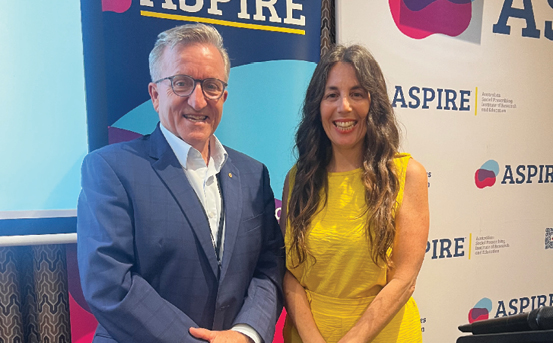
PAUL Sinclair, President of the International Pharmacy Federation (FIP), addressed last week's EACH25 international social prescribing conference (PD 21 Nov), outlining the potential role of pharmacy and pharmacists in addressing the social determinants of health.
Social prescribing is defined as a means by which primary healthcare professionals, including pharmacists, can connect patients with community programs, services and other social supports to address non-clinical needs and improve health and wellbeing.
This approach recognises the impact that social determinants of health have on an individual's health and wellbeing, Sinclair explained, and highlights that a patient may need help beyond what can be provided in traditional healthcare settings.
Pharmacists may be more familiar with the notion of self care than with social prescribing, said Sinclair, but they share many commonalities including a focus on promoting and maintaining well-being, preventing disease, and coping with illness.
"The goal is to help individuals manage stress, reduce the risk of illness, and enhance their overall quality of life, and this is where pharmacists can play a particularly active role," Sinclair said, noting that the FIP's work in the area aims to "leverage pharmacists' expertise, their accessibility, and their trusted relations in the communities in which they serve".
A sustainable funding model is essential, Sinclair pointed out, such that pharmacists' time, and that of the service providers, is adequately remunerated.
"The need for sustained funding within social prescribing teams cannot be ignored, because when funding collapses, members of the public attending those social activity services become once again unsupported persons," he said.
Sinclair highlighted a strategy to enhance social prescribing services in pharmacy, telling attendees:
"We must include self care as part of pharmacist health benefit offerings across all countries.
"We must introduce self care modules in healthcare professionals training curriculum and CPD.
"We must promote non-communicable disease (NCD) prevention through corporate social responsibility, partnerships with workplaces, schools, and community organisations.
"We must enable pharmacists to refer directly to other healthcare professionals.
"We must ensure better support for primary care networks to deliver self care and social prescribing.
"We must ensure service and workforce data is used to identify equity issues and inform evidence-based policies.
"We must encourage pharmacy schools to develop and evaluate innovative care models, including social prescribing, and NCD focused public health initiatives.
"And we must accelerate efforts to enable sustainable funding for pharmacist led social prescribing."
Sinclair recommended those interested in social prescribing check out the International Social Prescribing Pharmacy Association, which aims to educate community pharmacists on the principles and benefits of social prescribing - learn more HERE. KB
Pictured: Paul Sinclair with session chair Jenny Kirschner of Pharmacy Addressing Loneliness and Social Isolation (PALS).
The above article was sent to subscribers in Pharmacy Daily's issue from 02 Dec 25
To see the full newsletter, see the embedded issue below or CLICK HERE to download Pharmacy Daily from 02 Dec 25