


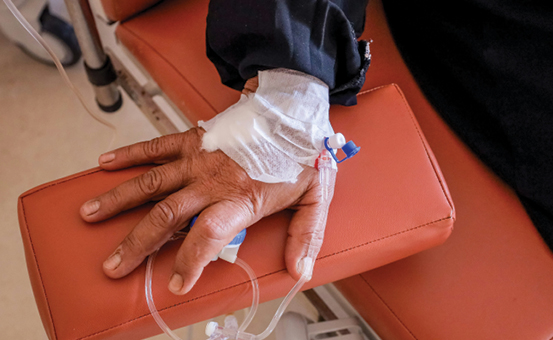
NEW research from Monash Institute of Pharmaceutical Sciences (MIPS) and Halozyme Therapeutics is paving the way for a shift in how anti-cancer immunotherapy is delivered, making it less complex and painful for the patient, and potentially improving the treatment outcome for some medicines.
The study, published in Cancer Immunology Research, addressed a current challenge in the delivery of monoclonal antibody immunotherapies, which typically require high doses or volumes to be effective and, as a result, are infused intravenously.
However, patients would prefer subcutaneous administration, as it is more convenient and less painful, but this method is often not possible due to the high volume required to be administered.
To counter this, Halozyme Therapeutics developed a recombinant version of an enzyme called hyaluronidase.
When co-administered in a subcutaneous injection, hyaluronidase transiently but almost immediately, breaks down one of the structural components of the space below the skin (hyaluronan) that restricts the subcutaneous injection of large volumes, thereby making an intravenous to subcutaneous transition possible.
While using hyaluronidase to facilitate subcutaneous injection is not new, what has not been described before is whether administering with hyaluronidase might actually improve therapy rather than just more convenient.
"We show here, for the first time, that for some treatments that help the immune system fight cancer, when they are co-administered subcutaneously with hyaluronidase, they are indeed more effective and hyaluronidase is able to 'boost' the benefit of subcutaneous administration," said co-lead author of the study, Professor Chris Porter.
Co-lead author of the study, Dr Gracia Gracia, said that this approach (subcutaneous injection with hyaluronidase) helps treatments to reach the lymphatic system, where immune responses are generated.
"Because the lymphatic system plays an important role in certain cancers - particularly those involving tumor-draining lymph nodes - delivering treatment directly to this system may be a promising therapeutic approach."
The study is available HERE. KB
The above article was sent to subscribers in Pharmacy Daily's issue from 29 Jan 26
To see the full newsletter, see the embedded issue below or CLICK HERE to download Pharmacy Daily from 29 Jan 26