




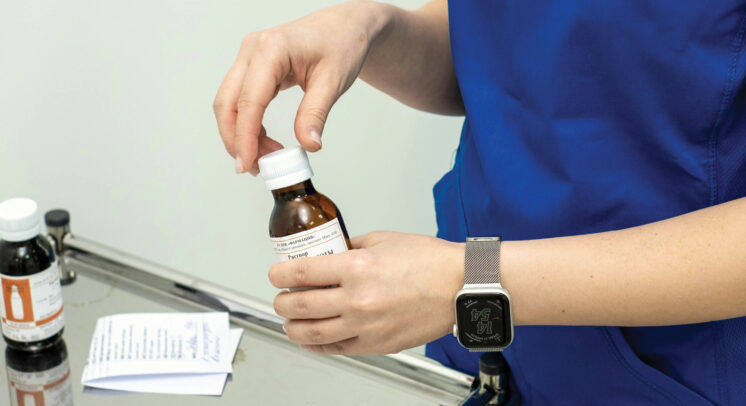
FINDINGS from a world-first simulation trial into one of healthcare's most widely accepted medication-safety practices - nurse double-checking - suggest it is not always superior to single-checking.
Led by Professor Johanna Westbrook from the Australian Institute of Health Innovation at Macquarie University, the study casts doubt on whether outcomes from the often-mandated practice of having two nurses independently check medications, rather than just one, justify the resources required.
"Our findings also raise important questions for other health professionals such as pharmacists, who play a vital role in keeping patients safe but often rely on double-checking as a safety strategy," Professor Westbrook told Pharmacy Daily.
The study involved 82 nurses from two paediatric hospitals.
Across 1,160 dose administrations, there were 640 embedded errors, and overall nurses detected 72% of them.
In the independent double-checking (IDC) condition, nurses were 11% more likely to detect an error relative to the single-checking condition.
However, they found that the benefit varied by nurse experience - experienced nurses showed a 26% improvement with IDC, but there was no difference for early-career nurses.
An interesting finding was that early-career nurses outperformed their more experienced colleagues when checking alone (73% vs 63%).
The team also found evidence of what they called 'social loafing', where the presence of a second checker resulted in reduced error detection, particularly for early-career nurses.
A further concern was that despite being made aware there would be potential errors, and successfully identifying several during the simulation, nurses missed over 20% of planted medication errors.
In terms of resources, the team found the average time taken to administer a medication set to one patient was significantly longer in the IDC condition (29 minutes) compared with single-checking (24 minutes).
Given the inconsistent benefits, nursing resources required, and the difficulty of maintaining 'independence' in practice on busy clinical wards, the study team suggested a more effective, scalable strategy could be to improve single-checking skills to enhance medication safety.
Read the study HERE. KB
The above article was sent to subscribers in Pharmacy Daily's issue from 20 Mar 26
To see the full newsletter, see the embedded issue below or CLICK HERE to download Pharmacy Daily from 20 Mar 26