



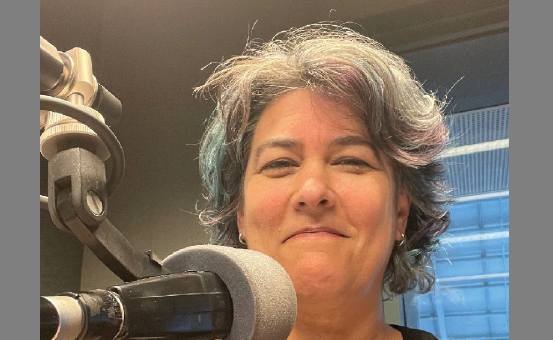
IN AN eye-opening and inspiring session at the recent AdPha Medicines Management 2025 (MM2025) conference, the medical director of the Uniting Medically Supervised Injecting Centre (MSIC) in Sydney, Dr Marianne Jauncey (pictured), shared lessons in practical support pharmacists can provide for members of society who have fallen through the cracks.
Dr Jauncey told attendees that the MSIC has many regular clients with complex health conditions who live with homelessness and have difficulties with medication adherence.
One way MSIC helps such clients is by holding onto their medication to administer when the client visits.
Having identified someone who could benefit from this assistance, the MSIC connects with the registered prescriber who provides the team with a written request and full identifying details of the person, the script including any supported administration processes such as Webster-pak, information on potential side effects/interactions, and an agreement about nature and frequency of feedback required from the MSIC along with any other necessary information.
"It basically allows us to act rather like a carer - so as someone who is assisting someone to take their medicines by the equivalent of handing it to them across the kitchen table," Dr Jauncey told Pharmacy Daily.
The team also acts as advocates for the client.
"Sometimes this means contacting prescribers with client's permission to ask if there is anything they can do to assist and ask if dose alterations would be something they agree could be safe/useful, including providing them information about compliance as we know it, and/or risks with current medication pattern," Dr Jauncey explained.
As for paying for the medicines, the Department of Health, Ageing and Disability has a Medication Program for Homeless People which can provide funding for Pharmaceutical Benefits Scheme (PBS) medication.
In terms of what a pharmacist could do around mediation assistance, Dr Jauncey suggested two possible options.
"[Under the Staged Supply Program] medications can be held at the pharmacy and provided to the patient at intervals/times deemed appropriate by their prescriber," Dr Jauncey explained, although she acknowledged it was not often done due to the work required and potential risk involved.
"A second option would be pharmacists working in partnership with other organisations or individuals that can assist, using similar systems to the one we use to improve adherence/compliance.
"It does take a pharmacist being proactive and likely values-aligned, which is hard when you are basically running a business, but nevertheless has its own rewards in terms of job satisfaction."
She told Pharmacy Daily that pharmacists have a unique role in being able to support members of the community who are struggling, particularly those with opiate dependence and other addictions.
"First and foremost from a harm reduction point of view, we would hope that all pharmacists sign up to the Commonwealth Take Home Naloxone program.
"And secondly we would be keen to see them consider involvement in medications for opiate dependence - methadone and buprenorphine," she said, highlighting that "these are life-saving medicines considered 'essential' medicines by the World Health Organization".
"One final point would be that they get involved in helping to change the narrative around people who use drugs, away from fear and towards dignity."
Additional useful measures could include proactively contacting other stakeholders involved in their care, forming partnerships with organisations that may have funds to pay for scripts, or providing Webster-paks at reduced fees.
"We are really looking forward to seeing if and how we can embed a pharmacist within our service to improve medication access and support for our clients," Dr Jauncey added. KB
The above article was sent to subscribers in Pharmacy Daily's issue from 18 Dec 25
To see the full newsletter, see the embedded issue below or CLICK HERE to download Pharmacy Daily from 18 Dec 25