


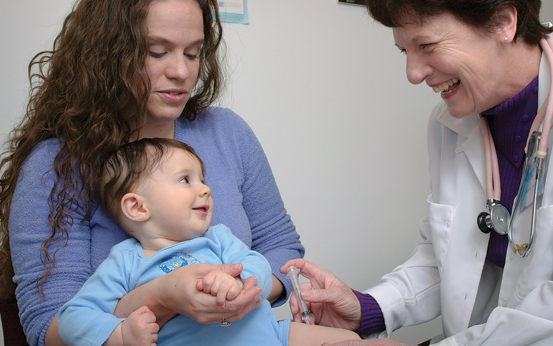
With Australia experiencing its biggest rise in whooping cough cases in 35 years, alongside the lowest rates of childhood immunisation in a decade, doctors and public health experts are imploring the Australian community to get vaccinated.
During 2024 and 2025, over 82,000 whooping cough cases were recorded nationwide, the largest number since monitoring began in 1991.
While the condition does have cyclical peaks that occur every few years, the recent large spike has been linked to relatively low transmission during the COVID pandemic as well as low childhood vaccination rates.
In a press conference alongside members of doctors peak bodies, Health Minister Mark Butler said that health ministers around the country are focused on the issue.
"We want to see two things," Butler said.
"The first thing we want to see is as many pregnant mums take advantage of the free whooping vaccination in their third trimester as possible.
"That's good for your protection, but it's also good for protecting your newborn baby in those first several weeks of their life before they get their first whooping cough jab at the age of two months.
"But we are also seeing childhood immunisation rates slip right across the immunisation system.
"This is not particular to Australia, we're seeing that right across the world - the World Health Organization is talking about it."
RACGP president Dr Michael Wright said doctors are also worried about the drop in vaccination rates.
"And there is concern that people aren't as confident in getting vaccines as they used to be.
"It's something that, as a community but also as individual health professionals, we're really taking it seriously to try and encourage our patients to get on board and get vaccinated."
While the pertussis vaccine is available for free on the National Immunisation Program (NIP) for babies, adolescents and pregnant women, others in the community - including vulnerable adults and close contacts of babies too young to be vaccinated - have to pay.
Minister Butler has indicated that he would be willing to support broader inclusion on the NIP if recommended by the Pharmaceutical Benefits Advisory Committee (PBAC). KB
The above article was sent to subscribers in Pharmacy Daily's issue from 10 Feb 26
To see the full newsletter, see the embedded issue below or CLICK HERE to download Pharmacy Daily from 10 Feb 26