


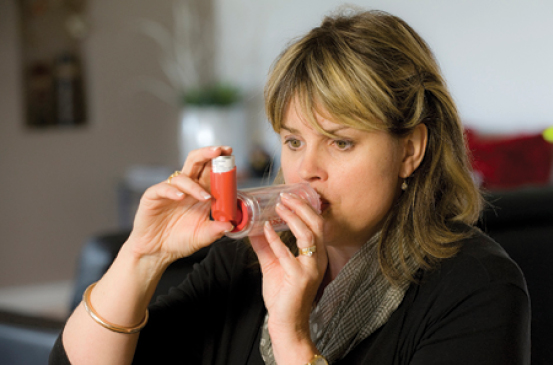
THE National Asthma Council Australia (NAC) has updated the Australian Asthma Handbook with important new recommendations, with a leading pharmacist flagging "challenging" conversations ahead for community pharmacists.
The updated guidelines encourage health professionals to stop prescribing or advising treatment with as-needed short-acting beta2 agonists (SABA) alone to manage asthma in adults and adolescents, and recommend anti-inflammatory-reliever-only therapy and maintenance-and-reliever therapy for adults and adolescents.
This represents a big shift for patients and health professionals, said Clinical Associate Professor Debbie Rigby, pharmacist and NAC Clinical Executive Lead.
"We've got a big problem with SABA - salbutamol - overuse and over-reliance in Australia and worldwide, and it's been shown it only benefits the symptoms of asthma, as in the bronco-constriction and the wheeze and the cough patients might get," she told Pharmacy Daily.
"It does nothing for the underlying inflammation that exists in people's lungs with asthma."
She explained that when people rely on salbutamol alone, it increases their risk of severe exacerbations, and even death.
"So I think the biggest challenge for community pharmacists is to have that conversation with patients when they come into the pharmacy requesting some salbutamol over-the-counter," she said.
"We've been using salbutamol for the last 50 years and people are very reliant on it.
"But we need to help patients understand that even though it makes them feel better, it can actually do some harm, and overuse is a signal of poor asthma control, which carries increased health risks.
"So it will be a fundamental change for patients."
Assoc Prof Rigby pointed out it is not about denying patients access to the drug, but helping them understand that there are better options for managing their asthma.
She suggested pharmacists recommend patients see their GP to get an assessment of their asthma, and ideally start on an anti-inflammatory reliever in the form of low-dose budesonide-formoterol, and take that as needed when any symptoms occur.
Those who experience frequent symptoms will need maintenance-and-reliever therapy, which they take daily as a regular dosing, and they take the same drugs - the same inhaler - as needed to relieve symptoms, she explained.
"Instead of reaching for separate puffers - a preventer and a reliever - the patient can use the one inhaler that prevents inflammation and also provides that immediate relief.
"So it's just one inhaler that they have to carry around and get prescriptions for."
The updated handbook is based on extensive research and review of national and international evidence conducted by an expert committee, and is available HERE. KB
The above article was sent to subscribers in Pharmacy Daily's issue from 17 Sep 25
To see the full newsletter, see the embedded issue below or CLICK HERE to download Pharmacy Daily from 17 Sep 25